


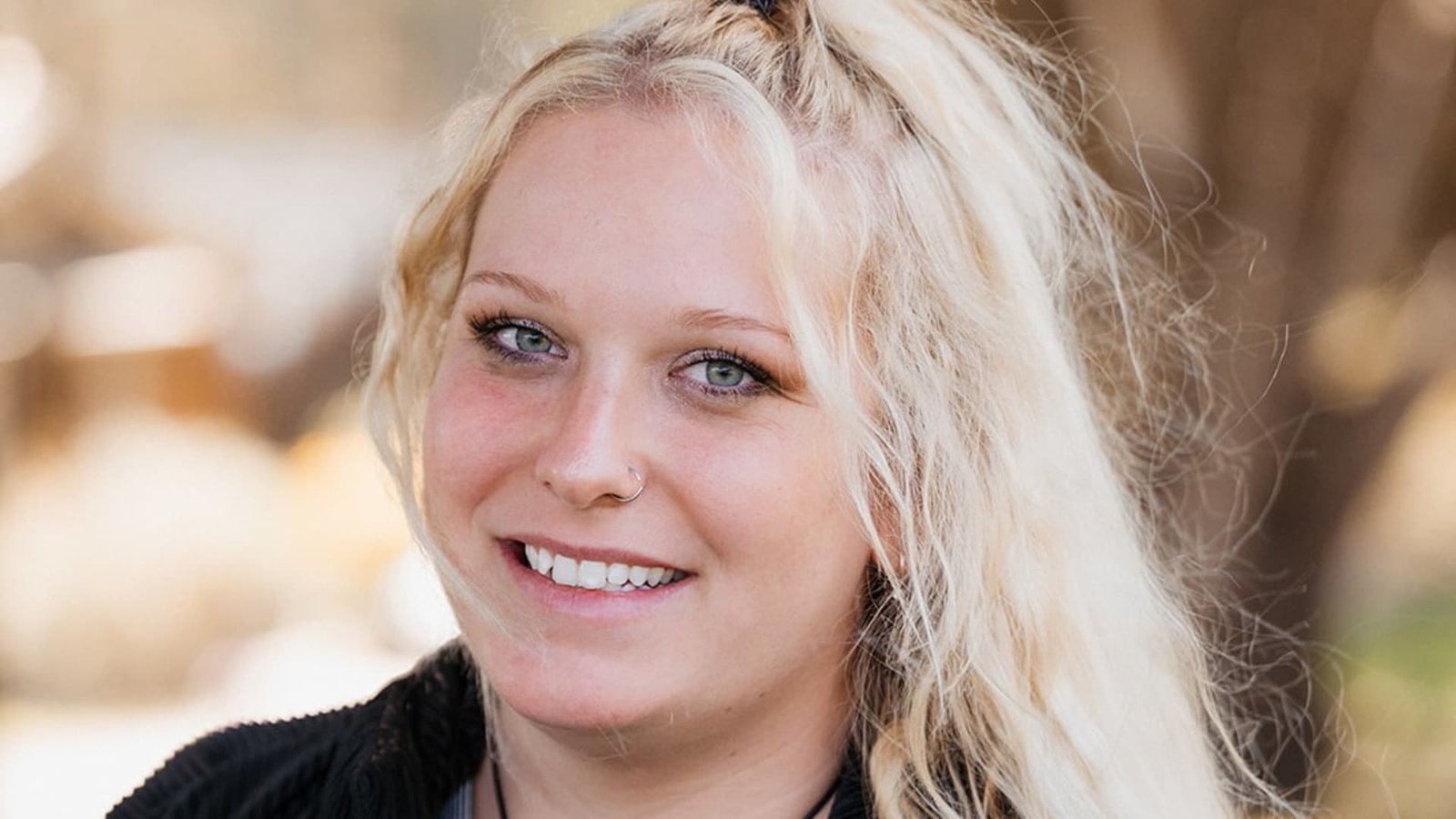
Maddie Freeman grew up spending hours of her day on social media.
The 24-year-old Littleton, Colorado, native says she was 12 when she got her first smartphone. When her peers started downloading apps like Snapchat, Instagram, Vine and Twitter, Freeman followed suit. It was fun to see what her friends were doing online.
It didn’t take long for social media to start consuming many of her waking hours. “My screen time in high school was around 10 hours a day,” she says. And that was just her phone use.
Throughout her high school and early college years, Freeman also experienced tremendous loss. Ten friends and peers died by suicide—five of them in 2020 alone. “Some of these people I hung out with, like, three days before they passed away,” she says. “And then they were just gone.”
Freeman began attending the University of Colorado, Boulder, in 2019, where she studied business administration. In the fall of 2020, after spending half of her freshman year at home due to the Covid pandemic, Freeman says she watched the Netflix documentary-drama “The Social Dilemma” about the negative effects of social media.
And something clicked, she says.
“That just really cemented it for me that this is one of the biggest issues facing my generation,” she says. Along with isolation during the pandemic, “it’s definitely a key part of why we’ve all struggled so much.”
According to a 2025 report, the Pew Research Center found that nearly half, 45%, of teens ages 13 to 17 say social media hurts the amount of sleep they get, with 40% saying it hurts their productivity and 19% saying it hurts their mental health.
Since their inception, social media companies have implemented protective measures for users such as filtering bullying comments and enabling minors to opt out of seeing personalized ads.
Days after watching the documentary, Freeman says she came up with a month-long social media detox that’s become a global movement: No Social Media November, or NoSo November. To date, tens of thousands of young people around the world have participated in it, she says.
Freeman now runs NoSo—a youth-led nonprofit that spearheads the month-long detox—on a full-time basis. She was named to the Forbes 30 Under 30 list in 2025.
Here’s how she built her mental health movement.
Young people emailed to say the detox improved their lives
In 2020, after the deaths of her friends, Freeman drafted a petition to her district in Colorado asking to implement more mental health resources and support systems for students.
That petition went viral, Freeman says, and she started working with her local school district on initiatives that included a suicide prevention presentation for high schoolers.
After watching “The Social Dilemma,” Freeman gave one of the classes she’d been working with a new presentation about “the business model of tech companies and how it’s harming mental health,” she says.
‘My goal is that young people don’t feel like victims to this technology’
Maddie Freeman
Founder, NoSo
She also gave students a challenge: One month off from social media. Freeman told them she’d be trying the detox herself, and “if anyone wants to join me voluntarily, it would be amazing.”
About 30 students embarked on the challenge. And the responses were overwhelming, she says.
Freeman says she received emails from young participants saying their body dysmorphia had “vanished” after only two weeks. She wasn’t surprised; she felt the profound effects of the break from social media herself.
Instead of scrolling, Freeman would pick up a book or go for a walk. “My anxiety and my depression were just so much easier to manage because I was turning to healthy coping mechanisms,” she says.
NoSo runs programs educating young people about the dangers of social media use
While at college, Freeman continued to grow what eventually became NoSo, expanding both its initial challenge and its activities.
NoSo now focuses on three main objectives:
- Running workshops and presentations at schools designed to educate young people about what Freeman says is “the addictive design of these social media platforms,” including tools to decrease screen time
- Hosting in-person mindfulness events with tea, meditation, nature walks and journaling prompts to offer “alternative coping mechanisms for people who scroll too much,” she says
Freeman is also currently a youth fellow at McGill University helping to do research around youth AI use.
“My goal is that young people don’t feel like victims to this technology,” she says of social media. She wants NoSo November to become as ubiquitous as health trends like Dry January.
Freeman’s still hearing from people about the impact of their own detox.
“I’ve had kids come up to me and tell me that they decided not to take their own life because of the impact of this program,” she says. “That is just the biggest impact I could ever dream to have because that’s how this started.”
If you or someone you know is in crisis, call or text 988 to reach the Suicide and Crisis Lifeline or chat live at 988lifeline.org. You can also visit SpeakingOfSuicide.com/resources for additional support.
Want to give your kids the ultimate advantage? Sign up for CNBC’s new online course, How to Raise Financially Smart Kids. Learn how to build healthy financial habits today to set your children up for greater success in the future. Use coupon code EARLYBIRD for 30% off. Offer valid from Dec. 8 to Dec. 22, 2025. Terms apply.