

Raúl Capdevila Murillo’s debut documentary has all of the components of a thrilling retro western. Set to a rousing score, the opening titles feature giant letters in bold yellow, splattering over the horizon of a dusty landscape. Then we get the return of the prodigal son, fresh from the hubbub of the so-called civilised big city. The son is, in fact, Capdevila Murillo himself, and instead of gunfight, Los Saldos – or Remainders – is about a different kind of struggle, that of the film-maker’s own family, farmers unsettled by industrial changes.
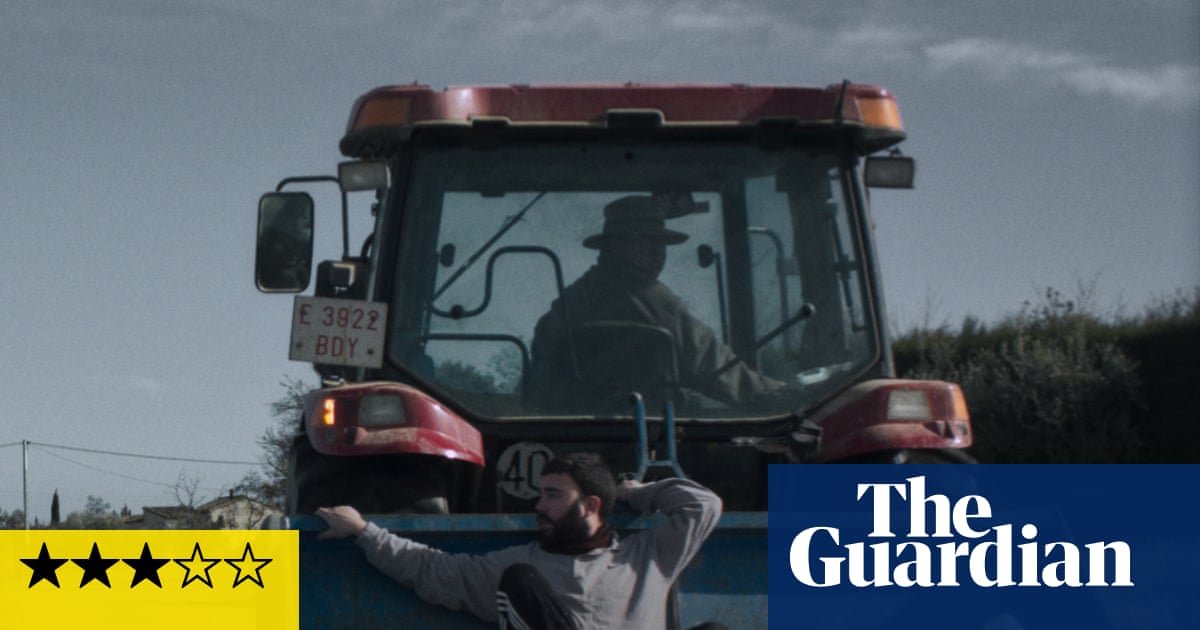
Shot in widescreen, the film lends a majestic quality to ordinary life in Binéfar, north-eastern Spain. We observe José Ramón, the director’s father, on his daily rounds, driving around in his pickup truck, tending to his crops and animals. The rhythm is slow and languid; even the mere discussion of a new water tank results in protracted discussion between José Ramón and his neighbours who, like him, are the remnants of a vanishing line of work. Meanwhile, a major meat-product company is planning a macro abattoir in the area. The news lingers in the air like a bad smell, as news reports and political discussions unspool on radio and TV.
More than a portrait of an endangered way of life, Los Saldos explores the emotional journey of reconnecting to one’s heritage. Capdevila Murillo relearns the farming history of his family through the physical act of working on the land; he also re-encounters traditional storytelling, as his grandmother passes down tales of ancestral healing rituals. One particular anecdote involves a local witch who has the power of removing warts; the abattoir, yet to be constructed, would perhaps look like such an unsightly growth on the lush natural landscape of Binéfar. As the forces of capitalism march on, however, there is no magical cure for these modern-day maladies.