


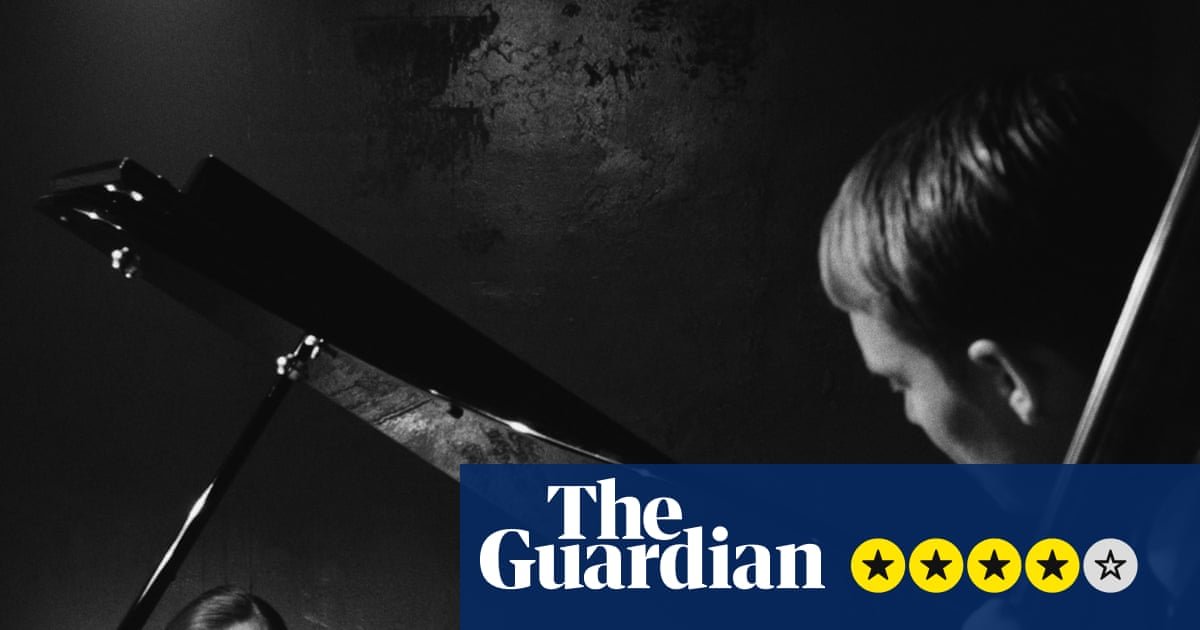
This elusive, ruminative and very absorbing movie presents its successive scenes like a sequence of unresolved chords carrying the listener on a journey without a destination – and is, incidentally, one of those rare films featuring a wonderful supporting turn that does not undermine or upstage the rest. It’s a film about music. Particularly, about what remains when a musician cannot play and is left to consider the terrible sacrifices made, without conscious consent, to this all-consuming vocation that creates family pain and jealousy almost as a toxic byproduct. It’s a drama to put you in mind of Glenn Gould and Hilary du Pré, sister of Jacqueline.
Screenwriter Mark O’Halloran has adapted the 2013 novel Intermission by Owen Martell about renowned jazz pianist Bill Evans. It focuses on a period of emotional devastation for Evans, when no music was possible – perhaps a restorative intermission, perhaps the start of a calamitous new aridity – when his close friend and bassist Scott LaFaro was killed in a car crash in his 20s.
The director is Grant Gee, who made the wonderful documentary Innocence of Memories about Orhan Pamuk. Cinematographer Piers McGrail has shot the film in a smoky high-contrast monochrome, switching to garish colour for three flashforward segments of 1973, 1979 and 1980; these show three other deaths, including Evans’s own, for each of which LaFaro was a kind of forerunner, and each attributable to his musical life.
Anders Danielsen Lie plays Evans as a gaunt and distrait figure, his reticence intensified by grief; someone whose glasses are perched on a face almost too thin to support them, a smoker always apparently about to vanish into the gauze of cigarette smoke. He is a heroin addict, co-dependent with his girlfriend Ellaine Schultz (Valerie Kane); this is a habit that now has even more of a chance of destroying his life. His deeply concerned brother Harry (Barry Ward) comes to Bill’s chaotic New York apartment and asks him to stay with him, his wife and young daughter. But he soon decides that Bill’s mere presence is dangerous for his own precarious mental health and sends him away for a rest cure with their elderly parents, now living in sunny Florida, where the sunshine creates a whiteness that scorches out of the screen.
His mother, Mary, is played by Laurie Metcalf, while Bill Pullman puts in a terrific performance as Evans’ genial, cantankerous dad; a garrulous old guy who drives his son around his sleek new neighbourhood (they hail from Plainfield, New Jersey), pleased as punch with his son’s prominence and his own prosperous leisure. At the wheel, he is given to faintly Rabbit Angstrom-esque monologues about the way the country is going: “Look at Kennedy. The Irish are taking over. But never any Welsh. It’s because we’ve never suffered. It is our punishment.”
But the awful truth is that Bill’s brother, Harry Jr, and perhaps even his dad are envious of him – especially Harry Jr, who is a music teacher and would-be musician himself, excruciatingly aware of his own inferiority and subject, in any case, to depression and mental illness. Harry Jr is better than Bill at golf (his dad is also a big golfer) but this is no consolation.
Harry Sr comes close to telling him how the working life that now pays for this laid-back new existence in Florida was a grim imprisonment. Perhaps he too wanted to be an artist, or just something other than what he was; something that would take an artist’s talent to imagine. But when Bill returns to New York he finds the old problems waiting for him, particularly his inability to build a meaningful relationship, and Kane conveys Ellaine’s terrible hurt. Gee thoroughly inhabits Evans’s world.